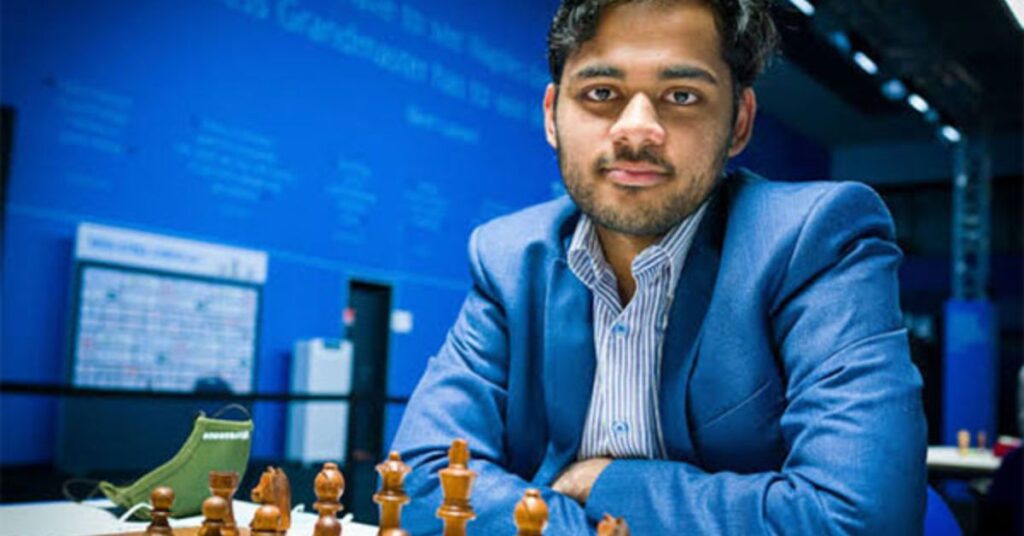

The Tata Steel Chess Tournament, often referred to as the “Wimbledon of Chess,” continued to deliver intense battles, shifting momentum, and moments of frustration for India’s top stars. In the latest round of action, Arjun Erigaisi suffered a setback against Vladimir Fedoseev, while R Praggnanandhaa’s search for his first win of the tournament continued, highlighting the unforgiving nature of elite classical chess.
For Indian chess fans, the round was a mix of disappointment and cautious optimism. While results did not go their way, the performances once again underlined how closely India’s young grandmasters are competing with the world’s best. At a tournament where a single inaccuracy can turn hours of solid play into defeat, both Arjun and Pragg were reminded of the razor-thin margins at the very top.
This blog offers a detailed breakdown of the key games, an analysis of what went wrong for Arjun Erigaisi, why Praggnanandhaa is still searching for a breakthrough win, and what these results mean for the rest of the Tata Steel Chess tournament.
Tata Steel Chess: A Tournament Like No Other
The Tata Steel Chess Tournament holds a special place in the global chess calendar. Hosted annually in Wijk aan Zee, it brings together:
- World champions and title contenders
- Rising prodigies
- Established elite grandmasters
The classical format, long time controls, and deeply competitive field make every round a test of endurance, preparation, and psychological strength. Wins are hard-earned, draws are often fought over for hours, and losses can be painful yet instructive.
For Indian players like Arjun Erigaisi and R Praggnanandhaa, the tournament is both a proving ground and a learning arena — a place where reputations are built and resilience is forged.
Arjun Erigaisi vs Vladimir Fedoseev: A Tough Lesson
A Promising Start That Slipped Away
Arjun Erigaisi entered his game against Vladimir Fedoseev with confidence, having shown sharp preparation and fighting spirit in earlier rounds. The opening phase of the game suggested a well-prepared approach, with Arjun opting for a solid structure designed to neutralise Fedoseev’s dynamic style.
For much of the middlegame, the position appeared balanced. Arjun:
- Maintained central control
- Avoided early complications
- Developed his pieces harmoniously
However, classical chess at this level rarely allows players to simply coast to safety.
The Critical Moment
The turning point came in the middlegame, when a seemingly natural move subtly shifted the balance. Fedoseev, known for his deep understanding of complex positions, seized the initiative with precise manoeuvring.
From that moment:
- Arjun was forced into defensive mode
- Small positional concessions accumulated
- Fedoseev gradually improved his pieces
What made the situation difficult was that there was no immediate tactical blow — just slow, relentless pressure.
Fedoseev’s Technique Shines
Vladimir Fedoseev demonstrated why he remains one of the most dangerous players in the field. His strengths were evident:
- Excellent piece coordination
- Patience in improving his position
- Willingness to convert small advantages
As the game progressed into the endgame, Fedoseev’s superior structure and active pieces left Arjun with limited counterplay. Despite resisting for a long time, Arjun eventually had to concede.
What Went Wrong for Arjun Erigaisi
Arjun’s loss was not the result of a blunder but rather:
- Slight inaccuracies under pressure
- Gradual loss of activity
- Difficulty generating counterplay
At this level, even minor misjudgements can be decisive. The game served as a reminder that against elite opponents, maintaining activity is just as important as avoiding mistakes.
R Praggnanandhaa: Another Round, Still No Win
A Tournament of Missed Opportunities
While Arjun faced defeat, R Praggnanandhaa once again had to settle for a result that extended his wait for a first win at this year’s Tata Steel Chess tournament. Despite playing solidly and showing strong preparation, Pragg has yet to convert his efforts into a full point.
This pattern has been one of the key talking points of his campaign so far.
Solid Play, But No Breakthrough
In his latest outing, Praggnanandhaa:
- Navigated the opening confidently
- Reached a playable middlegame
- Avoided serious tactical dangers
However, when the moment came to press for advantage, the position either simplified or drifted into equality. Against opponents who defend resourcefully, creating winning chances requires not just accuracy but also risk-taking at precisely the right moment.
Why Pragg’s Wins Are Elusive
Several factors help explain Pragg’s current situation:
- Elite Opposition
Every opponent at Tata Steel is capable of neutralising slight advantages. - Risk Management
Pragg has often chosen safety over aggression, which reduces losing chances but can also limit winning opportunities. - Tournament Pressure
The desire to score a first win can sometimes lead to over-caution rather than bold play.
Despite this, his games have shown that he is far from outclassed.
Indian Grandmasters at the Elite Level
The performances of Arjun Erigaisi and R Praggnanandhaa must be viewed in context. Indian chess is currently experiencing a golden generation, with multiple players competing regularly in top-tier events.
At Tata Steel:
- No game is easy
- Even draws are hard-earned
- Losses often come after hours of resistance
Both Arjun and Pragg are gaining invaluable experience that cannot be replicated in lower-tier tournaments.
The Psychological Challenge of Classical Chess
Classical chess tournaments test players in ways few other sports do. A single game can last:
- Four to six hours
- Require constant concentration
- Demand emotional control after setbacks
For young players, handling defeat and frustration is part of the journey.
Arjun’s loss and Pragg’s continued wait for a win are examples of:
- The mental resilience required at this level
- The importance of learning from difficult moments
Tournament Standings and Momentum
While individual results fluctuate, momentum plays a crucial role at Tata Steel. A single win can:
- Transform a player’s confidence
- Change the narrative of their tournament
- Relieve psychological pressure
Both Arjun and Pragg will be eager to reset mentally and approach the next rounds with renewed focus.
What These Results Mean Going Forward
For Arjun Erigaisi
- The loss is a setback but not a disaster
- His overall play remains competitive
- There are still opportunities to bounce back
Arjun has shown repeatedly that he can respond strongly after defeats.
For R Praggnanandhaa
- The lack of wins does not reflect poor form
- His consistency keeps him competitive
- A breakthrough result could change everything
Once the first win arrives, the pressure often lifts quickly.
Learning from Elite Opponents
Facing players like Vladimir Fedoseev offers invaluable lessons:
- How elite players convert small advantages
- How patience and precision outweigh aggression
- How endgame technique decides outcomes
These experiences accelerate growth far more than comfortable wins elsewhere.
Indian Chess: The Bigger Picture
Despite mixed results in this round, Indian chess remains on a strong upward trajectory. With:
- Multiple players ranked among the world’s best
- Consistent presence in elite tournaments
- Strong domestic and international support
losses like these are stepping stones rather than stumbling blocks.
Why Tata Steel Chess Is a Crucible for Champions
Many of today’s top grandmasters have spoken about how Tata Steel shaped their careers. The tournament teaches:
- How to handle pressure
- How to recover from losses
- How to fight for every half-point
For young players, these lessons are priceless.
The Road Ahead in the Tournament
As the tournament progresses:
- Pairings will become more complex
- Fatigue will play a role
- Psychological resilience will be tested
Both Arjun and Pragg will aim to:
- Simplify preparation
- Trust their instincts
- Play with controlled ambition
Fans’ Perspective: Patience and Belief
Indian chess fans have learned to balance expectations with patience. While victories are celebrated, there is growing understanding that:
- Elite tournaments are marathons, not sprints
- Development takes time
- Today’s lessons fuel tomorrow’s success
Support for Arjun and Pragg remains strong.
Conclusion: Tough Days, Valuable Lessons
The latest round of Tata Steel Chess brought disappointment for Indian fans, with Arjun Erigaisi losing to Vladimir Fedoseev and R Praggnanandhaa still waiting for his first win. Yet, these results do not tell the full story.
Both players continue to compete toe-to-toe with the world’s elite, gaining experience that will shape their futures. In a tournament where even the smallest error is punished, setbacks are inevitable — but so is growth.
As the rounds unfold, Arjun and Pragg will have more chances to turn promise into points. For now, the focus remains on learning, resilience, and the long-term journey — a journey that Indian chess is navigating with confidence, depth, and ambition.