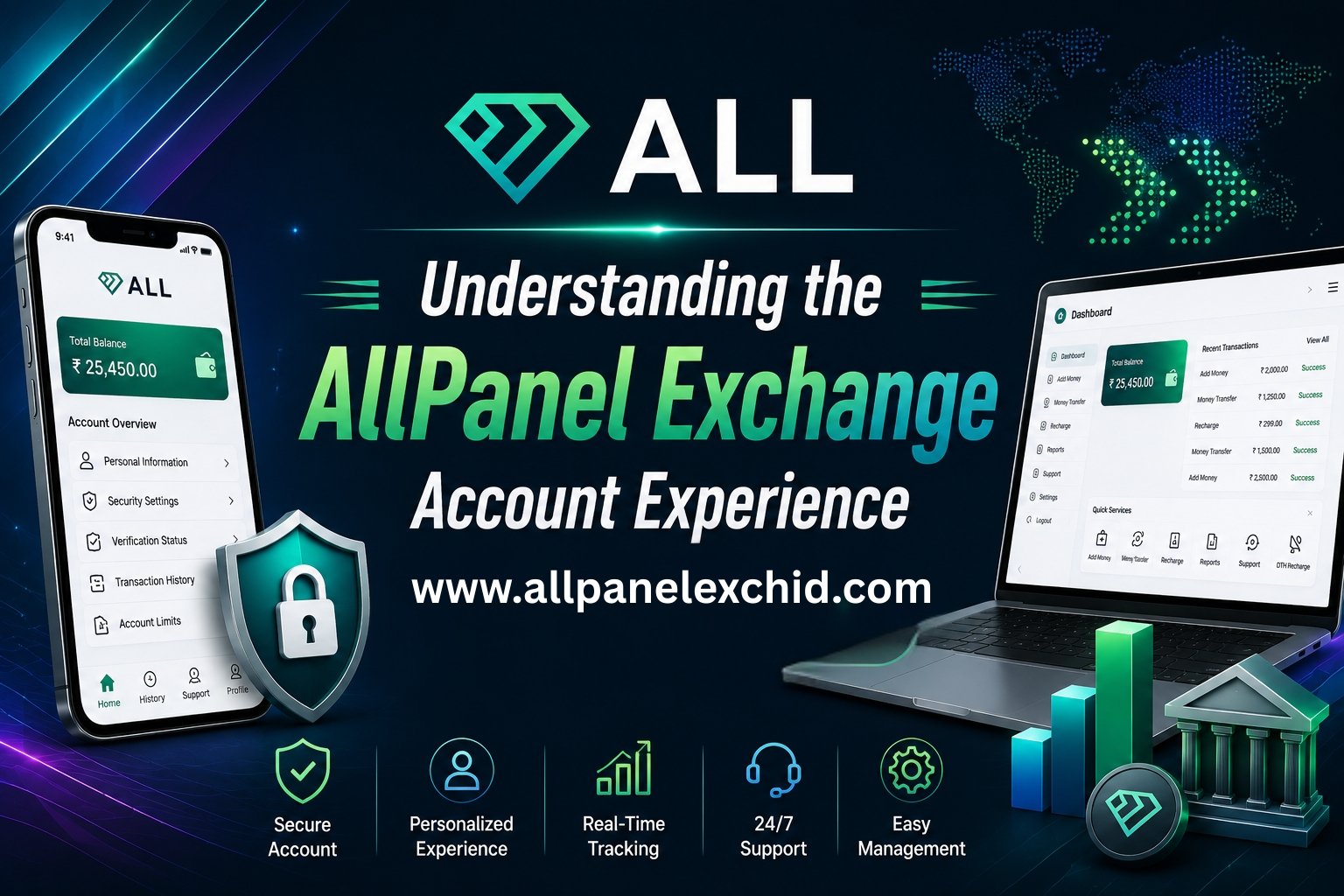
An online platform becomes much easier to use when you understand how its account system works. For beginners, the first few visits can raise simple questions: Where is the profile section? How does login work? Where can account details be managed? What should you do if you forget a password? How can you keep the account secure?
The AllPanel Exchange account experience can be understood through these basic areas. Whether you access the platform through a smartphone, browser, or another compatible device, learning the account structure helps make everyday navigation more comfortable.
This guide explains the account experience in simple language. It focuses on account access, profile management, dashboard navigation, security, mobile use, gaming-related sections, and common account problems.
The exact interface may change as the platform develops. Buttons, menus, and available options can move after updates, so users should always follow the current legitimate interface when completing account-related actions.
Allpanelexch | Allpanelexch ID | Allpanelexch Login | Allpanelexch App | Allpanel Exchange | Allpanelexch Apk
What Does an Account Do?
An account acts as your personal access point to the platform.
Instead of treating the platform as a collection of separate pages, an account connects your access with the features available to you.
Depending on the current platform structure, the account area may include profile information, login settings, security controls, notifications, preferences, and other supported options.
For users interested in gaming, the account can also provide access to relevant sections of the platform.
The important thing for beginners is to understand that an account is more than a username and password. It is also where important security and personal settings may be managed.
Starting With Account Access
The account experience begins with a legitimate login or registration page.
If you already have an account, use the correct sign-in method and enter your credentials carefully.
If you are new, follow the current registration process provided by the legitimate platform.
Do not use a random website simply because it has the AllPanel Exchange name.
Online platforms can have unofficial pages that look convincing.
Before entering private information, verify that you are using the correct access point.
This simple step is one of the most important parts of account protection.
Creating an Account
If registration is available, new users should take their time during account setup.
Read each field before completing it.
Make sure your personal information is accurate.
Use an email address or phone number that you control if the platform requires one for account recovery or verification.
Do not allow strangers to create an account for you.
If somebody says they can register faster if you provide your personal information, password, or verification code, be cautious.
Your account should remain under your control from the beginning.
Creating a Strong Password
A strong password provides an important layer of account protection.
Avoid predictable information such as your name, birthday, phone number, or simple number sequences.
Do not use the same password on every website.
If another service becomes compromised and you have reused the same password, your other accounts could also be affected.
A unique password reduces this risk.
If you use a password manager, make sure it is reputable and properly secured.
Most importantly, never send your password to another person.
Logging In Successfully
After registration, signing in should become a regular part of the user experience.
Enter your credentials carefully.
Smartphone keyboards can sometimes create accidental spaces or incorrect characters.
If the platform rejects your login information, check your details rather than repeatedly guessing.
Make sure you are using the correct account credentials.
If you recently changed your password, confirm that you are entering the updated password.
If you cannot remember it, use the legitimate recovery option.
Understanding the Account Dashboard
After signing in, the dashboard can serve as the main control center.
It may display shortcuts to account functions, gaming sections, notifications, settings, or other available features.
The dashboard can be different on mobile and desktop.
On a computer, several options may be visible at the same time.
On a smartphone, many options may be hidden inside a menu.
This does not necessarily mean the mobile version is missing features.
It may simply be designed for a smaller screen.
Exploring the Profile Area
The profile section is generally where users can review account-related information.
Depending on the current design, you may find details such as your account name, registered information, security options, or preferences.
Read carefully before editing anything.
If you change information, make sure it is accurate.
Avoid unnecessary modifications.
A well-maintained profile makes it easier to recognize your own account details and identify unusual changes.
Managing Account Information
Account management should be approached carefully.
If the platform allows users to update contact information, password settings, or preferences, follow the instructions provided on the current interface.
Before saving a change, review it.
A small typing error in an email address or phone number could make future account recovery more difficult.
If a change requires verification, complete the process through the legitimate platform rather than through a third-party contact.
Password Changes
Changing a password can be useful if you believe your existing password is weak or may have been exposed.
Choose a new password that is different from your previous one.
Do not use a slightly modified version of the old password if you can avoid it.
After changing the password, update it wherever you legitimately store your credentials.
Never send the new password to friends or online contacts.
If you receive a message asking you to confirm your new password, do not respond with the password itself.
Verification Codes
Some account systems may use verification codes as an additional layer of protection.
These codes should be considered private.
If you receive a code, do not share it with another person.
This includes people who claim to be technical support.
A person who asks for your verification code may be attempting to access your account.
If you receive an unexpected code that you did not request, consider changing your password and checking your account security through legitimate channels.
Account Security Basics
Account security does not require complicated technical knowledge.
It mostly involves good everyday habits.
Three useful rules are:
- Keep credentials private: Never share passwords or verification codes.
- Use trusted access points: Verify websites and applications before entering account information.
- Protect the device: Use a screen lock and keep your smartphone or computer updated.
These habits can protect not only your AllPanel Exchange account but also your other online accounts.
Recognizing Suspicious Login Pages
Fake login pages can look surprisingly realistic.
They may copy familiar logos, colors, buttons, and layouts.
A suspicious page may also use a slightly different website address.
Before entering your credentials, check the address carefully.
If you received the page through an unexpected message, avoid clicking the link.
Instead, open the legitimate platform independently.
This reduces the chance of entering your password into a fake page.
Account Access on Smartphones
Smartphones provide convenient account access, but they also require careful device management.
Use a screen lock.
Do not leave your account open on a phone that other people regularly use.
If you lose your smartphone, secure your device and account as quickly as possible.
Keep your Android or other mobile operating system updated.
If you access the platform through an APK, make sure the application comes from a legitimate source.
Web-Based Account Access
Browser access can be convenient when you do not want to install an application.
You can use a compatible browser to access the legitimate platform website.
However, browser access requires the same account-security habits.
Do not enter your credentials into unknown websites.
Avoid saving passwords on shared computers.
Sign out after using a public or shared device.
Keep the browser updated to support modern security standards.
Understanding Mobile and Desktop Differences
Your account itself may remain the same across devices, but the interface can change.
A desktop dashboard may display several account options simultaneously.
A mobile version may place them inside a navigation menu.
Some buttons may be represented by icons instead of text.
If you cannot find an account feature on your smartphone, open the main menu and look through the profile or settings area.
Do not assume the feature has been removed simply because it is not visible on the first screen.
Account Access for Gaming Users
For users interested in gaming, the account can act as the starting point for accessing available gaming-related sections.
Depending on the current platform structure, users may see categories connected with cricket, football, or other games.
The account experience can make navigation easier because relevant sections may be available through the dashboard or main menu.
Take time to understand each section.
Do not rush through unfamiliar options.
A clear understanding of the interface makes the overall gaming experience easier to manage.
Keeping Gaming and Account Management Separate
Gaming sections and account settings serve different purposes.
A gaming area may be designed for entertainment and game-related information.
The account area handles personal access and security.
If you need to change a password, update profile details, or review security options, look for the account or settings section rather than trying to make changes inside a gaming area.
Understanding this separation helps prevent confusion.
Notifications and Account Alerts
Notifications can provide useful information about account activity.
Depending on available features, alerts may relate to login activity, account changes, updates, or other platform events.
Read notifications carefully.
If an alert asks you to provide your password through an unfamiliar link, do not follow it automatically.
Open the platform directly and check the account yourself.
This gives you a safer way to confirm whether the alert is genuine.
Keeping Recovery Information Current
Account recovery depends on the information associated with the account.
If your platform provides recovery details, make sure they remain accurate.
For example, if a phone number or email address is used for verification, losing access to it can make account recovery harder.
Do not add someone else’s contact information simply because they offer to help.
Your recovery details should remain under your control.
What If You Forget Your Password?
Forgetting a password is a normal problem.
The safest approach is to use the official recovery process.
Start from the legitimate login page.
Look for the password recovery option.
Follow the instructions carefully.
If verification is required, complete it through the platform’s recognized process.
Avoid third-party services that claim they can recover your account for a fee.
Never send your existing password or verification code to another person.
What If Your Account Is Locked?
An account may sometimes become temporarily unavailable because of repeated incorrect login attempts or other security checks.
Do not continue entering random passwords.
Wait if the platform asks you to do so.
Then follow the current account recovery or verification process.
If the problem continues, contact legitimate support.
Give support a clear description of the issue without sharing your password.
What If You Notice Unusual Activity?
If something about your account looks unfamiliar, take it seriously.
Examples could include unexpected account changes, unfamiliar login alerts, or settings you do not remember changing.
First secure your account.
Change your password through the legitimate interface.
Review available security options.
If the platform provides account activity information, check it carefully.
Do not confront an unknown person or attempt to investigate through unofficial contacts.
Focus on securing your account.
Keeping the Device Secure
Your account is closely connected to the device you use.
A secure device should have a screen lock.
Operating system updates should be installed through legitimate channels.
Unnecessary applications should be removed.
If you use an APK, verify the file source before installation.
Avoid modified packages that you cannot verify.
The fewer questionable applications you have on your smartphone, the easier it is to maintain a clean and secure environment.
Handling Shared Devices
If you share a computer or smartphone with family members or coworkers, account management requires extra care.
Do not allow your password to be saved on a device that others can access.
Always sign out when you finish.
Do not leave your account open while stepping away.
If the device has separate user profiles, use your own profile whenever possible.
These small habits help prevent accidental or unauthorized account access.
Account Maintenance
An account does not need constant attention, but occasional checks are useful.
Review your profile information.
Check security settings.
Remove unnecessary saved login sessions where appropriate.
Make sure your recovery information remains accurate.
Review notifications.
If something looks unfamiliar, investigate it through legitimate channels.
A short account check every so often can help you notice problems early.
Common Login Troubleshooting
Login problems can have simple causes.
Start by checking the following:
- Verify your username, email address, or other required login information.
- Check your internet connection and make sure the access page is legitimate.
- If you have forgotten your password, use account recovery rather than repeatedly guessing.
If the problem continues, check whether the platform has a current service notice or contact legitimate support.
Slow Account Pages
If your account dashboard takes a long time to load, check your connection first.
Try another trusted website.
If other websites are also slow, the issue could be related to your network.
If the rest of your internet connection works normally, restart the AllPanel Exchange application or browser.
You can also restart your device.
Avoid repeatedly refreshing a page if it is already processing a request.
Application Access Problems
If you use a mobile application and cannot open your account, check whether the application is current and compatible with your device.
Review your available storage.
Restart your phone.
If an official update is available, check its details.
Do not replace the application with an unknown APK simply because you are experiencing a technical problem.
An unofficial file could create additional security concerns.
Browser Access Problems
Browser users should first confirm that the browser is updated.
Close unnecessary tabs.
Restart the browser.
Check your connection.
If the login page still does not work, verify that you are using the legitimate website.
Do not switch to an unfamiliar website simply because it appears in a search result.
When Support Is Needed
Sometimes users need direct assistance.
If you cannot resolve an account issue after checking your credentials, connection, device, and recovery options, use legitimate support.
Describe the problem clearly.
Explain what happens when you attempt to sign in.
Mention whether you see an error message.
Do not send passwords, verification codes, or other sensitive credentials.
A support request should explain the problem, not expose your account.
Responsible Gaming and Account Use
Account access can make gaming convenient, but convenience should be balanced with responsible habits.
Set reasonable boundaries for gaming sessions.
Take breaks.
Avoid gaming while driving or when you need to concentrate on another task.
Keep gaming separate from work, studies, sleep, and important personal responsibilities.
If gaming activities involve financial decisions, understand the risks and applicable rules before participating.
Always comply with local laws and relevant age requirements.
Frequently Asked Questions
What is the AllPanel Exchange account experience?
It includes the process of accessing, managing, and protecting an account while using supported AllPanel Exchange features through mobile or web access.
How should beginners start?
Start with legitimate account access, then explore the dashboard, profile section, main navigation, and settings one area at a time.
How can I protect my account?
Use a strong unique password, keep verification codes private, protect your device with a screen lock, and avoid suspicious login links.
Can I use the same account on different devices?
If the platform supports access across devices, you may be able to use the same account. Always follow the current platform’s device and security requirements.
What should I do if I forget my password?
Use the legitimate account recovery option. Do not ask strangers to recover your account or provide your password to anyone.
Why is my dashboard not loading?
Possible causes include internet problems, browser issues, application compatibility, device performance, or temporary platform conditions.
Should I save my password on a shared computer?
It is generally better not to save private credentials on a computer that other people can access.
What if I receive an unexpected verification code?
Do not share it. If you did not request the code, review your account security through a legitimate access point.
Can I manage my account from a smartphone?
If mobile access is supported, account management may be available through a compatible browser or application.
What should I do if I notice unusual account activity?
Secure the account through the legitimate platform, change your password, review available security settings, and contact legitimate support if necessary.
Final Thoughts
Understanding the AllPanel Exchange account experience is much easier when you divide it into a few simple areas.
Start with legitimate access. Whether you are registering a new account or signing in to an existing one, verify the website or application before entering private information.
Next, learn the dashboard and profile sections. The dashboard acts as the central point for navigation, while the account area is where personal details, security settings, and other account options may be managed.
Password protection should always be a priority. Use a strong, unique password and never share it with another person. Verification codes should receive the same level of protection.
Mobile and web access can provide different layouts, but the underlying account experience can remain similar. A smartphone may use compact menus, while a desktop can display more information at once.
If you experience login or account problems, start with simple troubleshooting. Check your credentials, internet connection, device, browser, or application. Use legitimate recovery options instead of relying on strangers or unofficial services.
For gaming users, learn the available sections gradually and maintain responsible boundaries. Gaming should remain an enjoyable activity that does not interfere with everyday responsibilities.
Ultimately, a good AllPanel Exchange account experience comes from three things: understanding the interface, managing your account carefully, and protecting your access details. Once these basics become familiar, navigating the platform can feel much more straightforward.
Get Allpanelexch ID: https://allpanelexchid.com/